Teaching
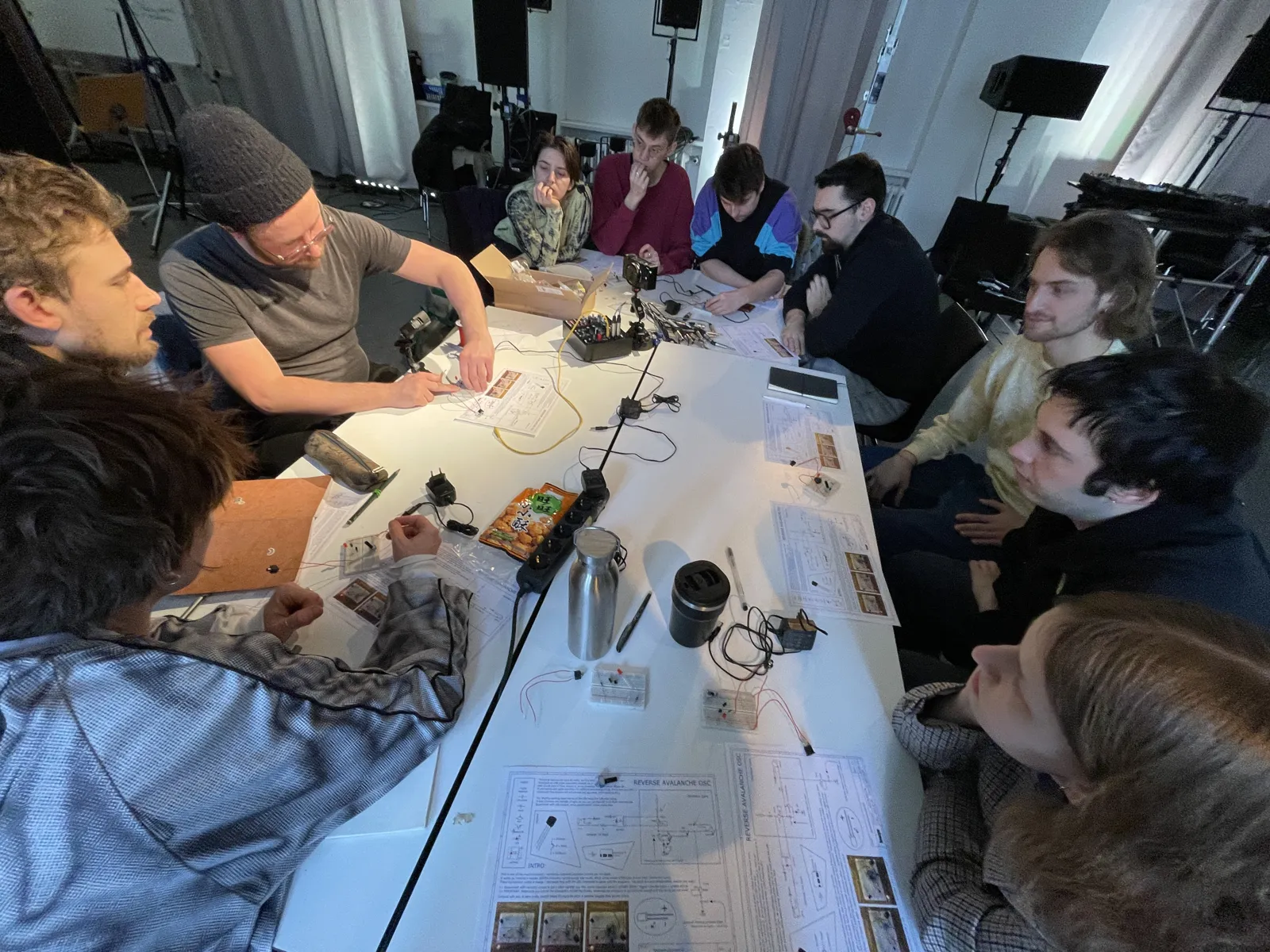
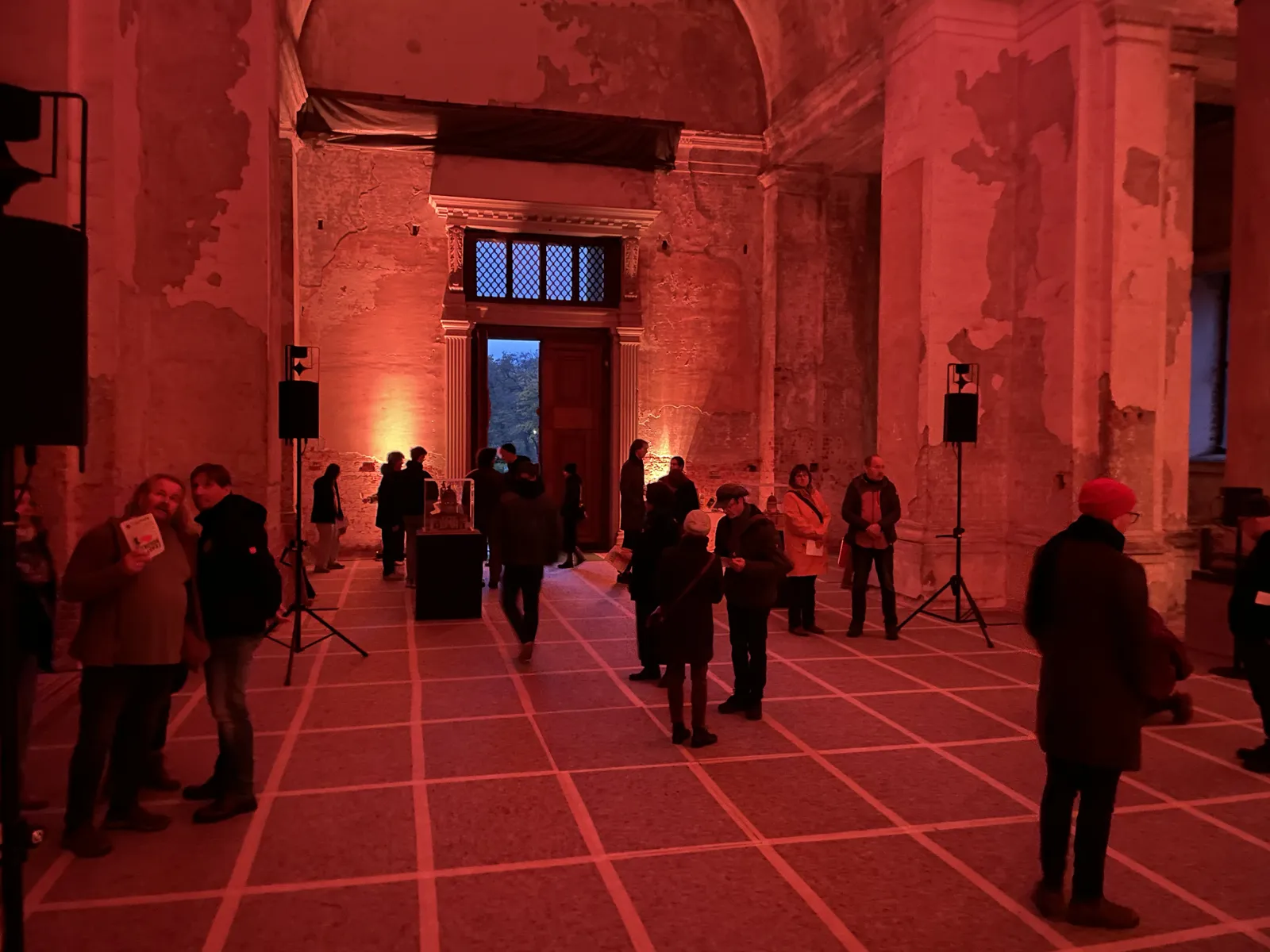
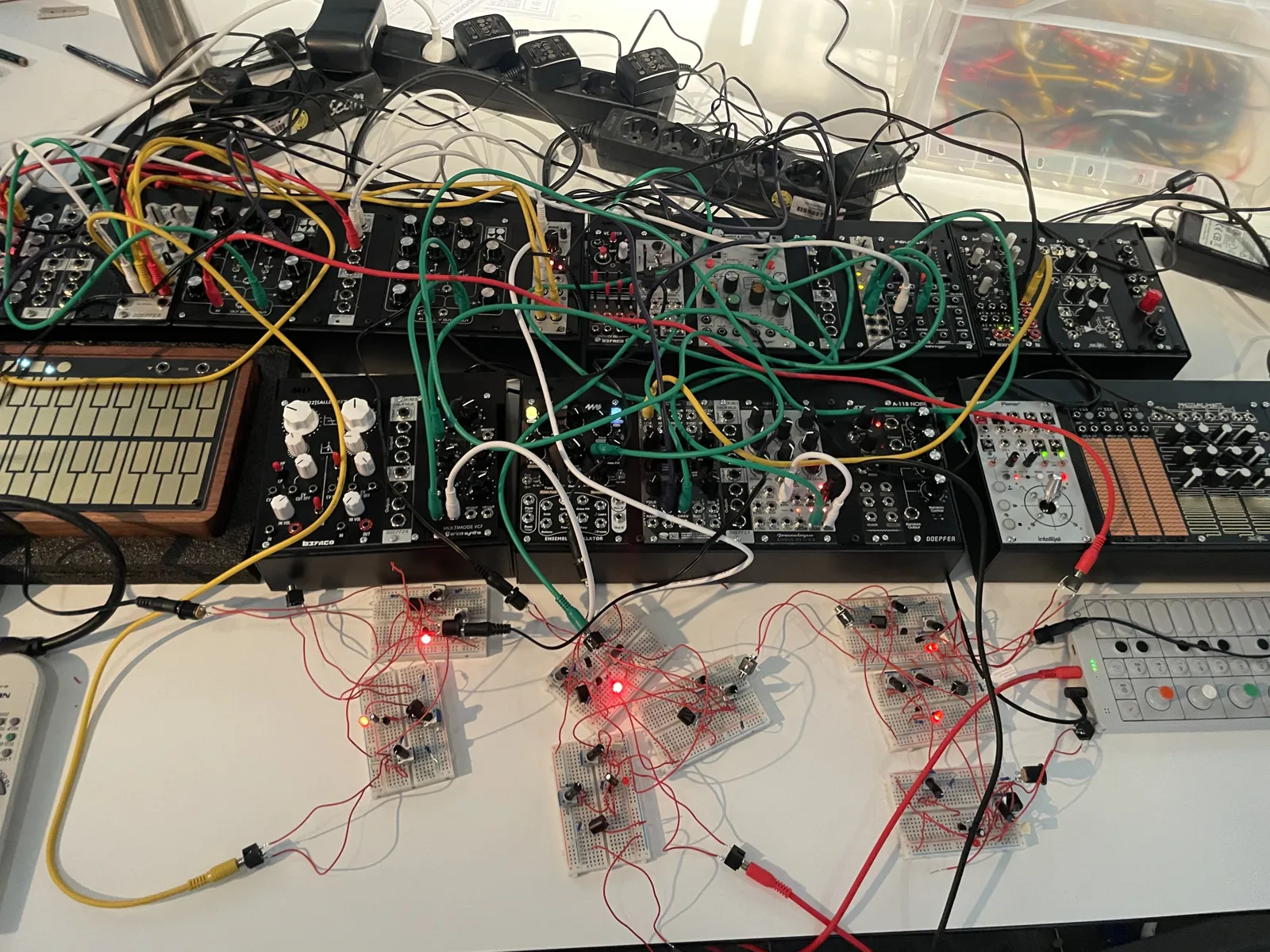
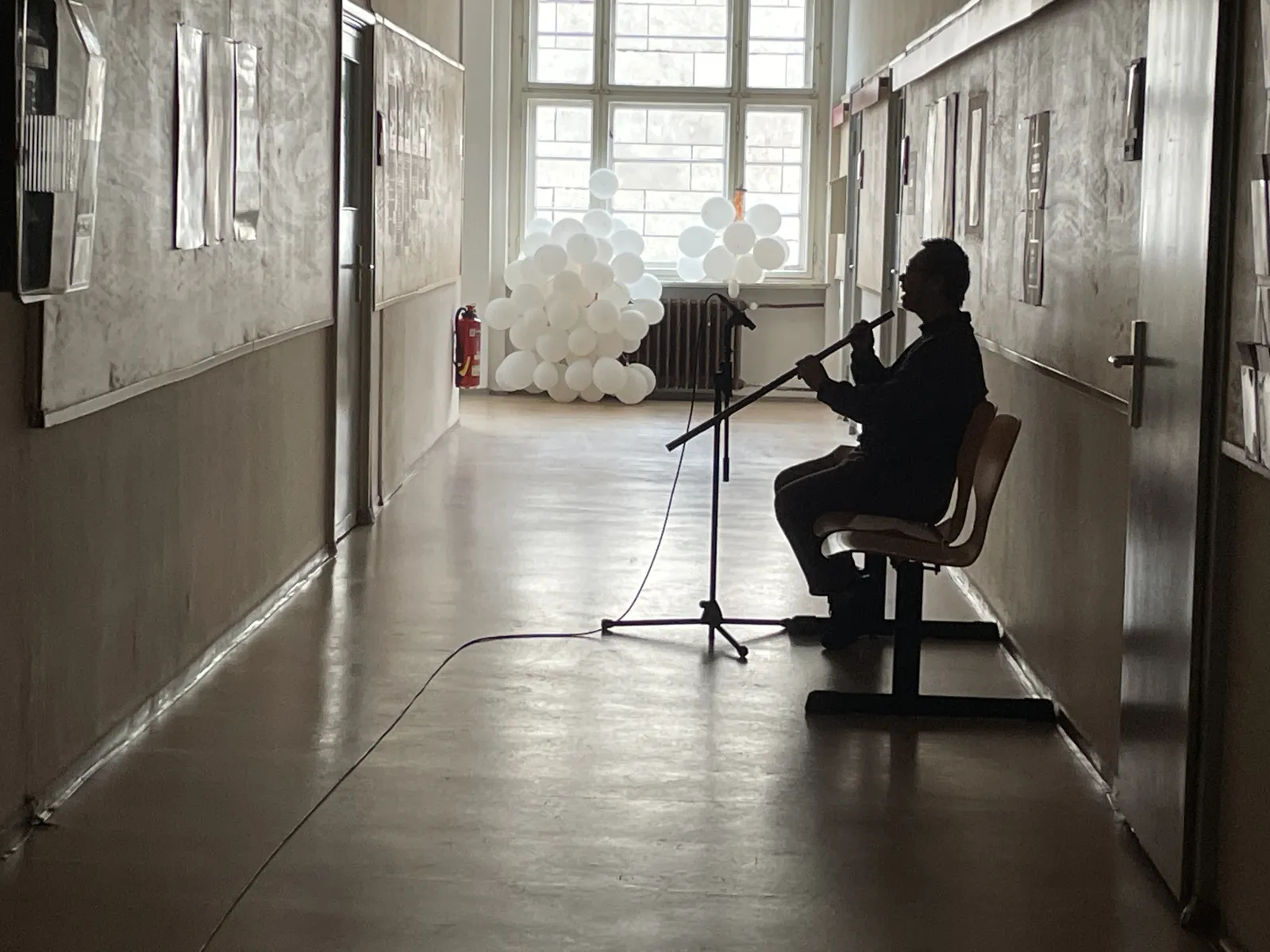
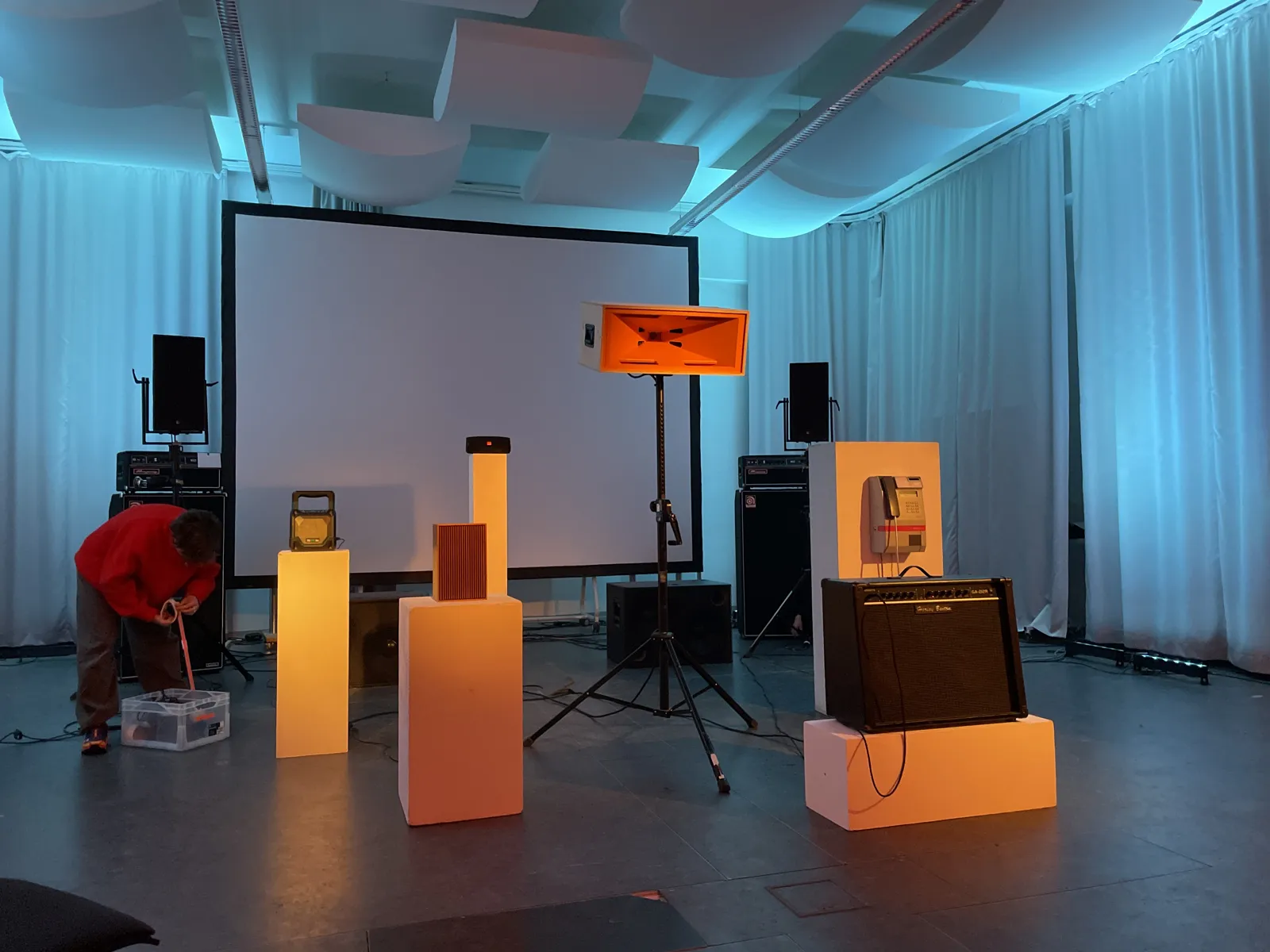
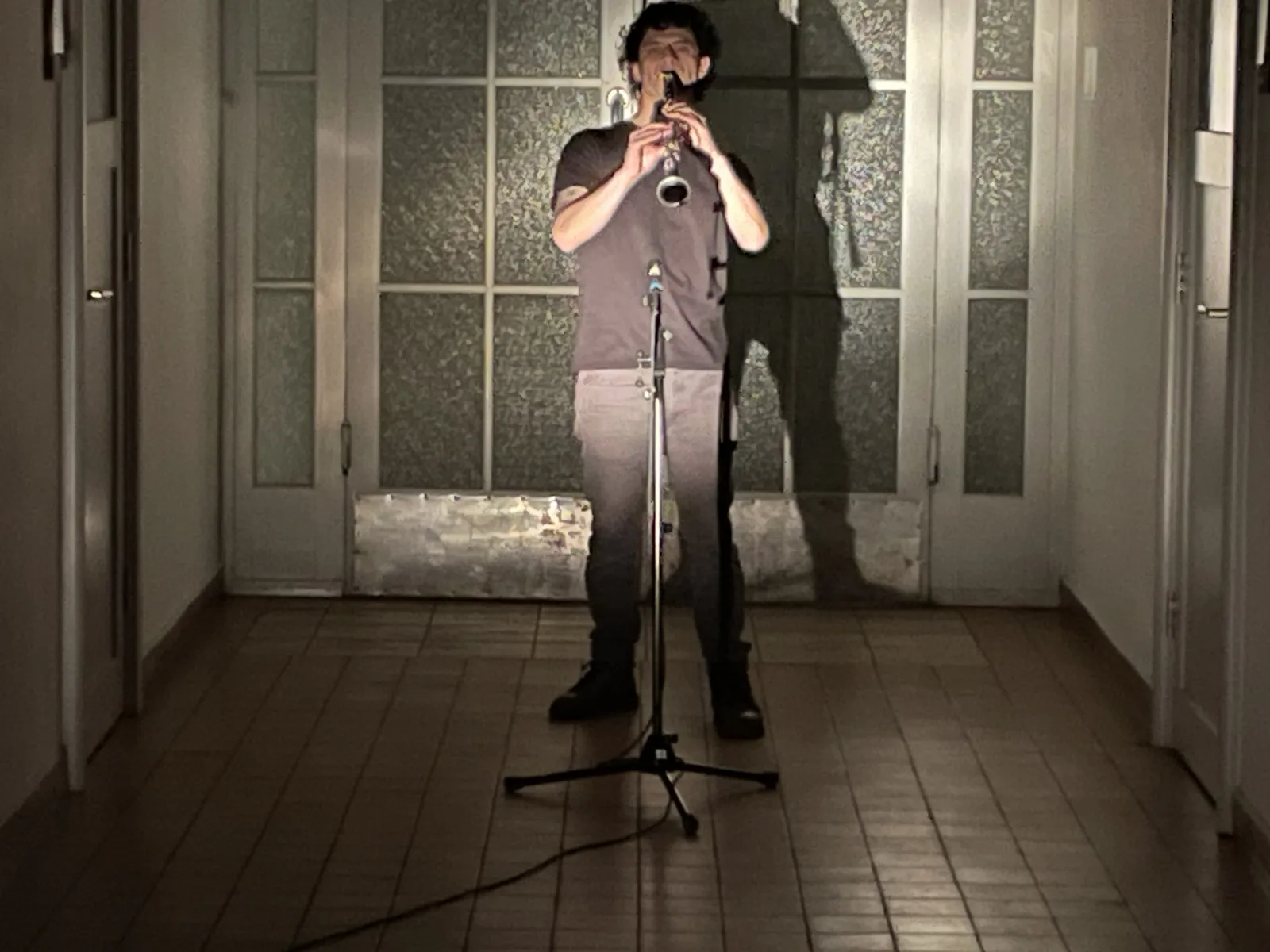
Since 2019, I have been actively teaching in the fields of electroacoustic composition and sound art. My work includes private consultations, workshops, and courses I have independently developed. Teaching engagements have taken place at institutions such as the Bern University of the Arts (HKB), the University of Music Franz Liszt Weimar (HfM), the Bauhaus University Weimar, and Moos in Berlin. A selection of these courses can be found below.
-
Analoge Klangsynthese2026/27
This introductory course teaches the fundamentals of analogue sound synthesis through hands-on work on the modular system of the SeaM. The aim is to understand the basic functions and signal paths, to develop patches independently and to try out suitable forms of planning and notating them.
At the end of the course, participants create small works based on recorded material or reduced setups for live performance.
-
Sonoluminous: what i hear is what i see is what i hear2026
In a physics experiment, sound waves induce a bright blue dot in the middle of a test tube. Water is excited from both sides by loudspeakers, so that gas bubbles form at the centre and implode under such high pressure that they release light waves. The phenomenon is popularly known as the “star in a glass”.
The course dealt with this phenomenon, sonoluminescence, and with the convertibility of sound and light. Frequency, amplitude, phase: waves have universal properties that carry over from one medium to another. Lectures covered these properties and formulated categories for classifying them; group work on laser microphony, sonography and schlieren photography deepened the inquiry.
The focus was on developing a collective sound and light installation. With self-built prototypes, audio-video synthesizers, microphones and light sensors, participants created a room-filling jungle of changing sound and light waves.
-
MONO – Musik für konkrete Lautsprecher2025/26
In this project module, participants developed works that engage directly with their own playback technology. The loudspeaker was approached as a preformed object that carries meaning: its specific materiality, its history and the context of its use shape the listening experience and became the starting point for artistic work.
-
Grundlagen der analogen und digitalen Klangsynthese2025/26
The course taught the theoretical and physical basics of sound synthesis: from the fundamentals of vibration theory and common units, through the digital representation of sound, to practical examples of synthesis techniques such as AM, RM, FM, waveshaping and granular synthesis.
It aimed at an understanding of the underlying principles as well as the ability to experiment independently with digital implementations and analogue modular synthesizers.
-
Feast & Roadkill2025
A sound art project on dead animals by students of the Studio for Electroacoustic Music (SeaM) of the Bauhaus University Weimar and the University of Music Franz Liszt Weimar. The works ranged from meat as sound material and a jazz-influenced requiem for a snail to listening into the inner soundscape of an octopus.
The works were exhibited in the mausoleum of the Tierpark Dessau from 1 to 14 November 2025, as a contribution to the Bauhaus anniversary in Dessau-Roßlau. Opening: 31 October 2025, 5 pm. Closing: 14 November 2025, 4 pm.
-
SEE – SeaM Experimental Ensemble2025
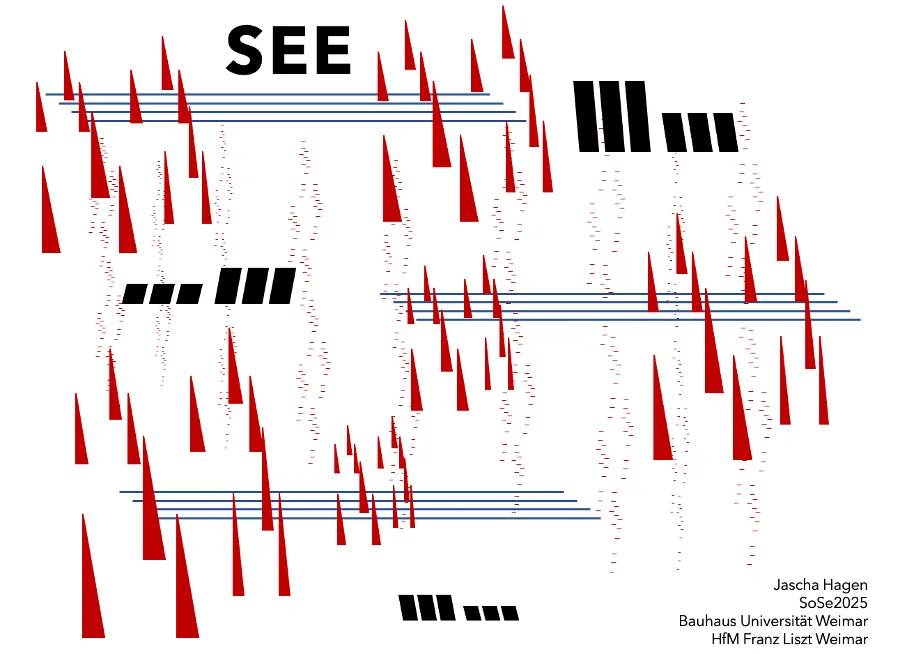
The course served as a starting point for the formation of an Experimental Ensemble open to students from the University of Music Franz Liszt Weimar and the Bauhaus University Weimar. It brought together instrumentalists and composers interested in electroacoustic and experimental music.
Over the semester, participants met weekly to play, listen, and experiment with sound, exploring improvisation and live-electronic setups through a hands-on approach. The project concluded with a public concert and laid the groundwork for a self-organized, ongoing student ensemble.
-
All Ears On Me: Sound Composition In New Media Environments2024/25
The course explored how sound artists can navigate a media environment increasingly dominated by fast, short, and visually driven content. It asked how, in a landscape where fleeting images and quick videos capture attention, sound-based work can still be heard—and whether it is even desirable or possible to compete for attention in such a fast-paced, image-oriented space.
In an era where digital platforms prioritize immediacy and visual engagement, Andy Warhol’s famous statement might be rephrased: “I don’t care about fame, but can you listen to my music for fifteen minutes?”
Throughout the semester, the course examined evolving concepts of authorship, ownership, and authenticity within the media of the 21st century. Students engaged with contemporary artistic positions that sought either to integrate into the structures of platform capitalism or to resist its constraints. The focus remained on practice: participants created their own sound compositions, translating theoretical reflection into artistic experimentation.
-
The Ultimate Microphone Course2024
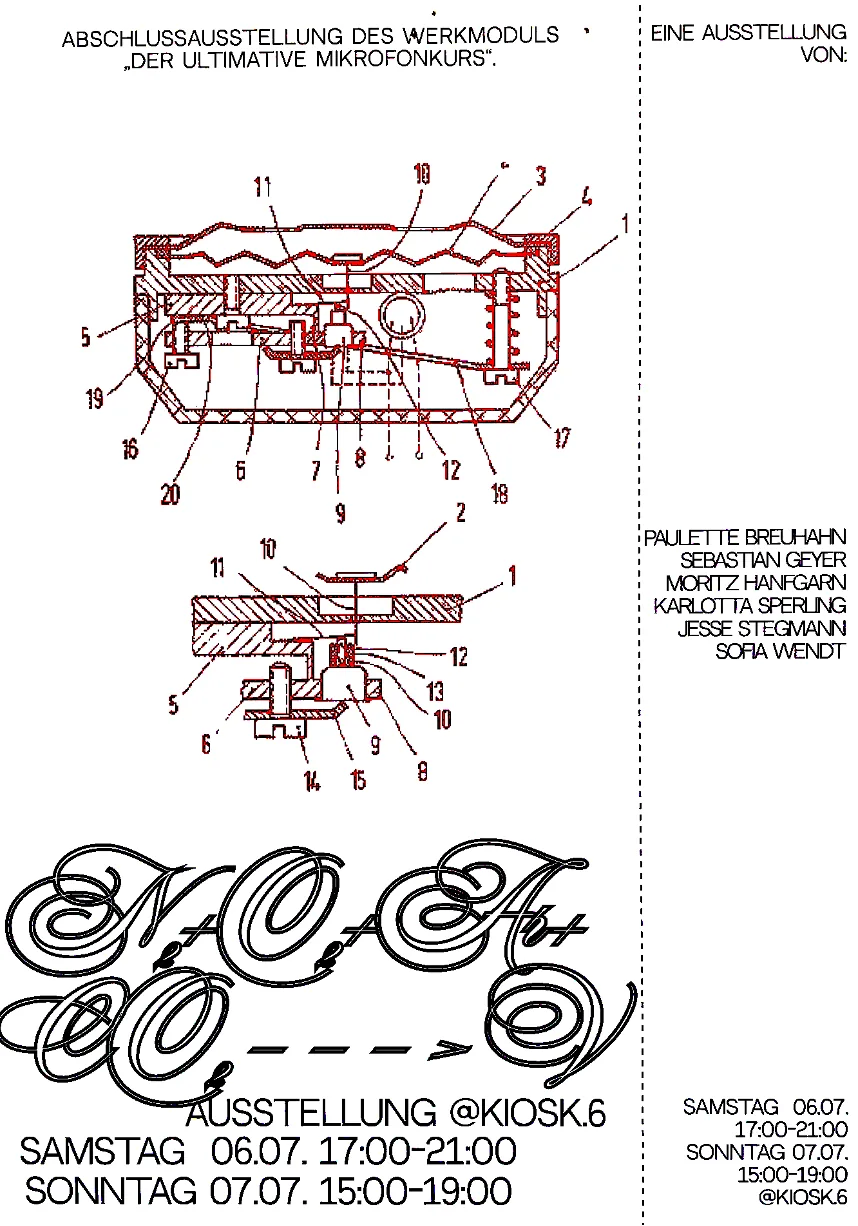
Have you ever set a microphone on fire? Or immersed yourself in a bubble bath surrounded by hydrophones? Maybe you’ve tied a bundle of dynamic mics to the back of a speeding car—or wondered what sound a microwaved microphone might make?
This course plunged headfirst into the world of microphones, exploring every conceivable facet of these sonic devices. Participants built their own microphones, learning to solder and understand the intricate details of design and construction.
Beyond the technical, the course traced the microphone’s cultural and historical journey—from its origins in telecommunication to its use in propaganda and its omnipresence in contemporary life.
By the end, students had uncovered not only how microphones work, but also their boundless creative and sonic potential.
-
From Data to Art: from the emergence of digital information to the appropriation of its logic and forms of appearance in art2024
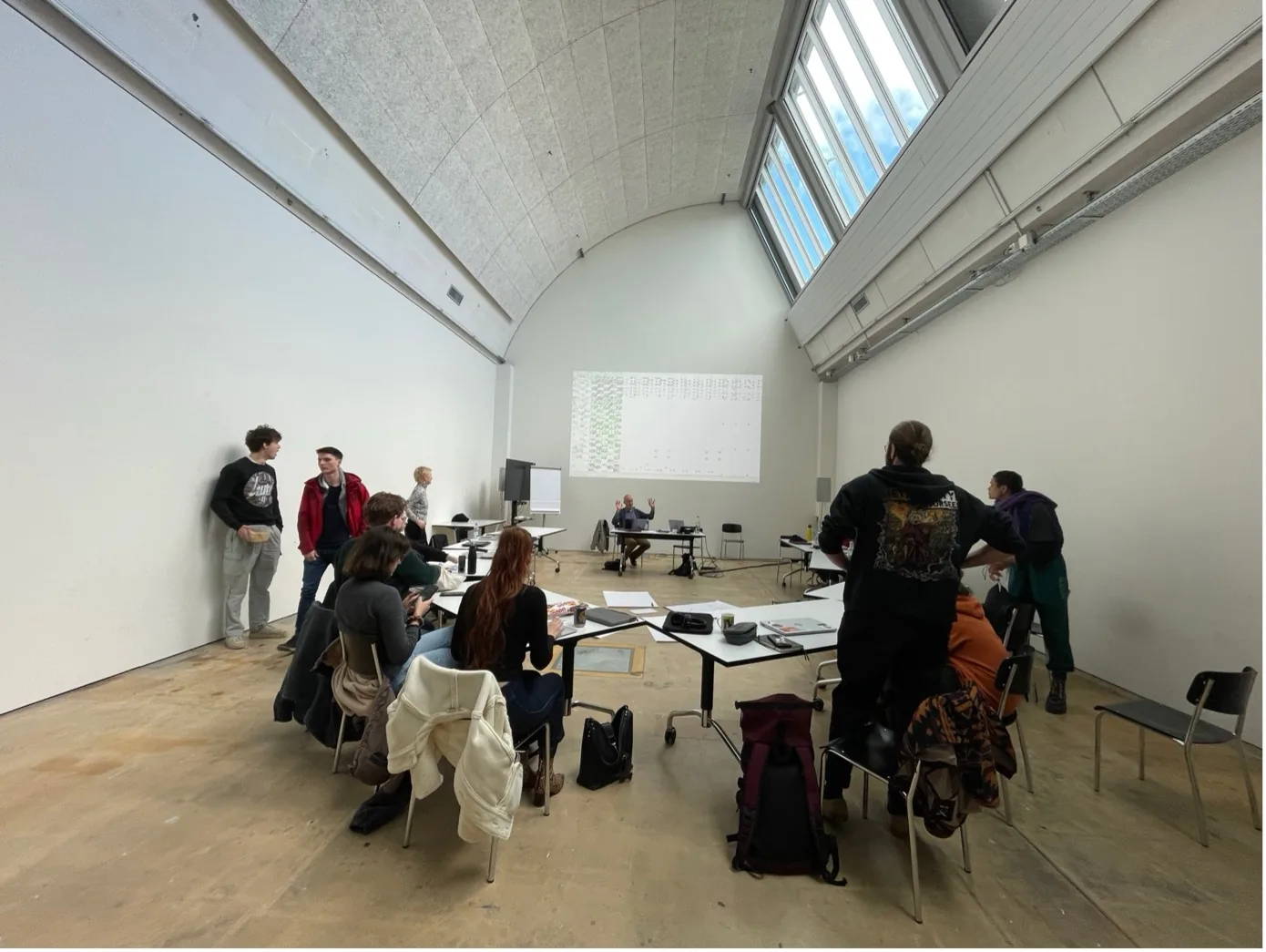
“Like air and drinking water, being digital will be noticed only by its absence, not its presence.” With this statement, Nicholas Negroponte, co-founder of the MIT Media Lab, declared the Digital Revolution over back in 1998—arguing that it had already become an inseparable part of everyday life.
Twenty-four years later, this course explored the depths of what we now call post-digitality, an era in which digital interactions permeate nearly every aspect of existence. But what are digital data, really? How did the binary code come into being? And how are data transformed into art today?
Through a media-historical and art-historical inquiry, participants traced these questions back to antiquity. The word digital itself derives from the Latin digitus—finger—and connects to the computus digitalis, the ancient culture of finger counting.
The aim of the course was to build a foundational historical understanding of computer science as a cultural field, enabling participants to better interpret and contextualize contemporary artistic positions.